
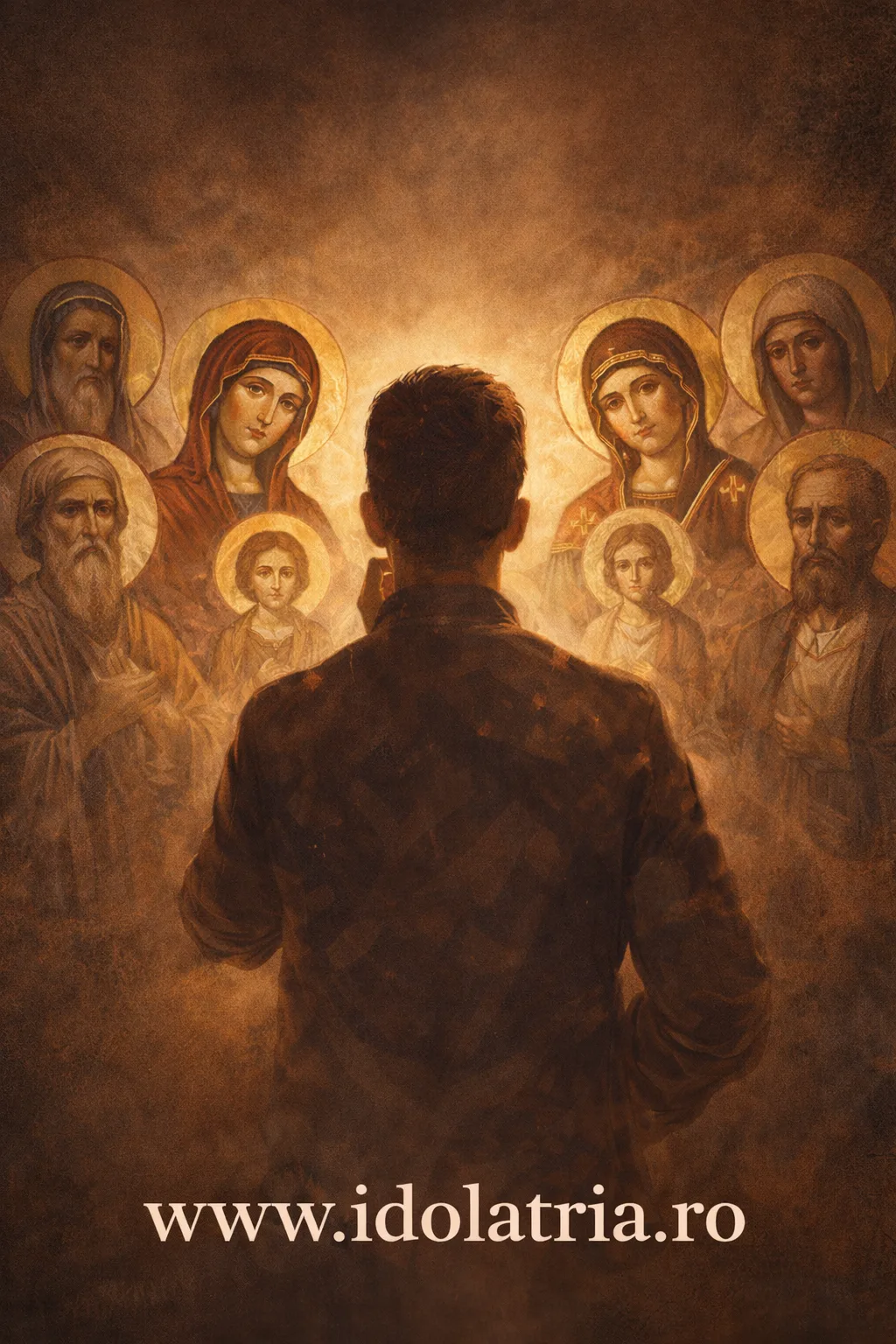
An honest question disturbs the silence of many altars: How do we know whom we are looking at? If you enter ten different churches, you will find ten different faces of the same “holy” figure. Some are Byzantine and severe, others are European and gentle, and some—as many critics observe—are downright distorted or bizarre. Is this diversity a form of art, or a massive deception of the mind?
1. The Visual Paradox: No one took their picture
It is a historical fact: we have no contemporary portraits of the Virgin Mary or the Apostles. The first representations appeared hundreds of years after their death. Therefore, the artist is not painting a physical reality, but a mental projection.
The risk here is enormous: when you pray in front of an image, your mind “binds” the sacred to features painted by a human being. If the artist was troubled or had a misguided vision, he imprints that disturbance onto your object of devotion.
2. “Distorted” Icons and Spiritual Influence
You have noticed well that some icons have features that do not seem human or that convey a sense of unease. In icon theology, it is said that the painter must fast and pray. But what happens when the painter is a mere mercenary—or worse, someone influenced by occult forces?
- Asymmetrical or grotesque faces: Instead of transmitting peace, these images can transmit the spirit of confusion of the one who created them.
- Misleading the believer: The worshipper thinks he is honoring a Saint, but his mind is captivated by an image that distorts spiritual reality, creating a barrier between man and God.
3. The Psychology of the Image: The Brain and the “Visual Idol”
The human mind works through associations. If you see the same face associated with “holiness” for 20 years, your brain will reject truth if it does not resemble the image. This is a form of psychological idolatry: you are no longer relating to the spiritual person, but to the “look” the artist has given them.
“You shall not make for yourself a carved image, nor any likeness of anything that is in heaven above...” (Exodus 20:4).
Was this command not given precisely to protect us from this confusion? God is Spirit, and Spirit cannot be confined by the brush of a man who never even saw the one he painted.
4. The Icon as a “Mask” for other entities
Here we touch the sensitive point discussed earlier on Idolatria.ro. If an icon does not respect historical truth and is created without authentic divine guidance, it can become a simple “mask.” Beneath this mask, an entity (a fallen angel) can hide, taking advantage of the fact that a person opens his heart before that false image.
5. Conclusion: Worship in Spirit and Truth
Christ said clearly: “God is Spirit, and those who worship Him must worship in spirit and truth.” (John 4:24).
When worship depends on the correctness of a brushstroke or the beauty of a painted face, we are on dangerous ground. If the icon becomes an object that “steals” our attention through its form (especially if it is distorted or bizarre), it ceases to be a window and becomes a wall—an idol that blocks our access to true spiritual communion.
Reflection question: If all the icons in the world disappeared tomorrow, would your relationship with God remain intact? If the answer is “no,” it means the image has become more important than the One represented.